Everyday Harm Reduction Tips
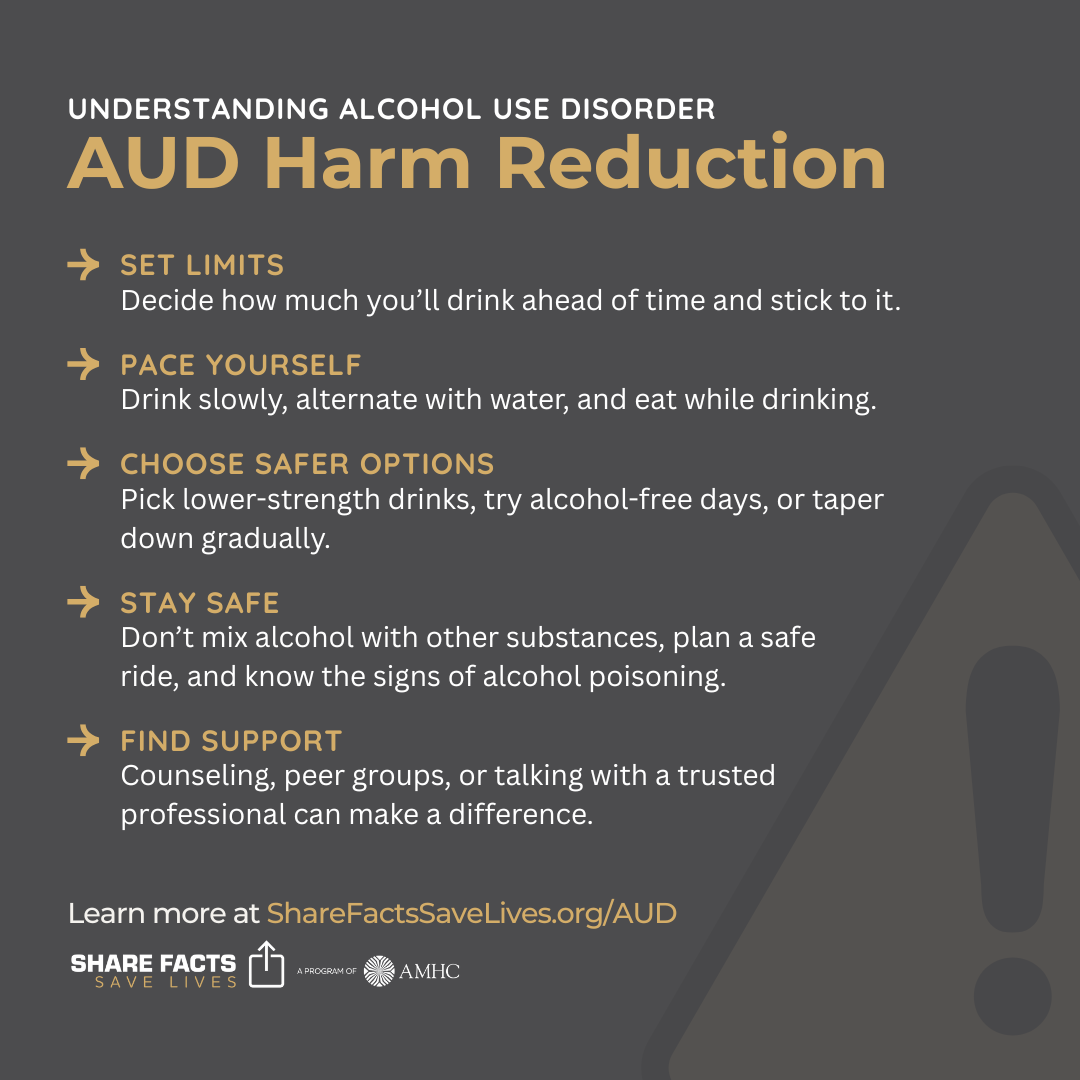
Set limits: Decide how much you’ll drink ahead of time and stick to it.
Pace yourself: Drink slowly, alternate with water, and eat while drinking.
Choose safer options: Pick lower-strength drinks, try alcohol-free days, or taper down gradually.
Stay safe: Don’t mix alcohol with other substances, plan a safe ride, and know the signs of alcohol poisoning.
Find support: Counseling, peer groups, or talking with a trusted professional can make a difference.
Additional Supports and Resources
Medication & Treatment Supports
- FDA-approved medications (e.g., naltrexone, acamprosate) can reduce cravings.
- Disulfiram may be prescribed under medical supervision to deter drinking.
- Evidence-based therapies: Cognitive Behavioral Therapy (CBT), motivational interviewing, and brief interventions.
Lifestyle & Coping Strategies
- Engage in alternative activities (sports, music, hobbies, or social events).
- Identify healthy rewards that replace alcohol use.
- Practice mindfulness and stress-reduction techniques.
Community & Policy Supports
- Managed Alcohol Programs (MAPs) for individuals with severe AUD.
- Access to community counseling, peer support, and harm reduction services.
- Population-level policies (e.g., reducing alcohol availability, increasing prices) to lower overall risk.
Sources: National Institute on Alcohol Abuse and Alcoholism (NIAAA); Incorporating Harm Reduction into Alcohol Use Disorder Treatment and Recovery. 2023. NIAAA.gov; Partnership to End Addiction. Harm Reduction Strategies for Alcohol. DrugFree.org